
Study in Latvia in 2027: Costs & Requirements
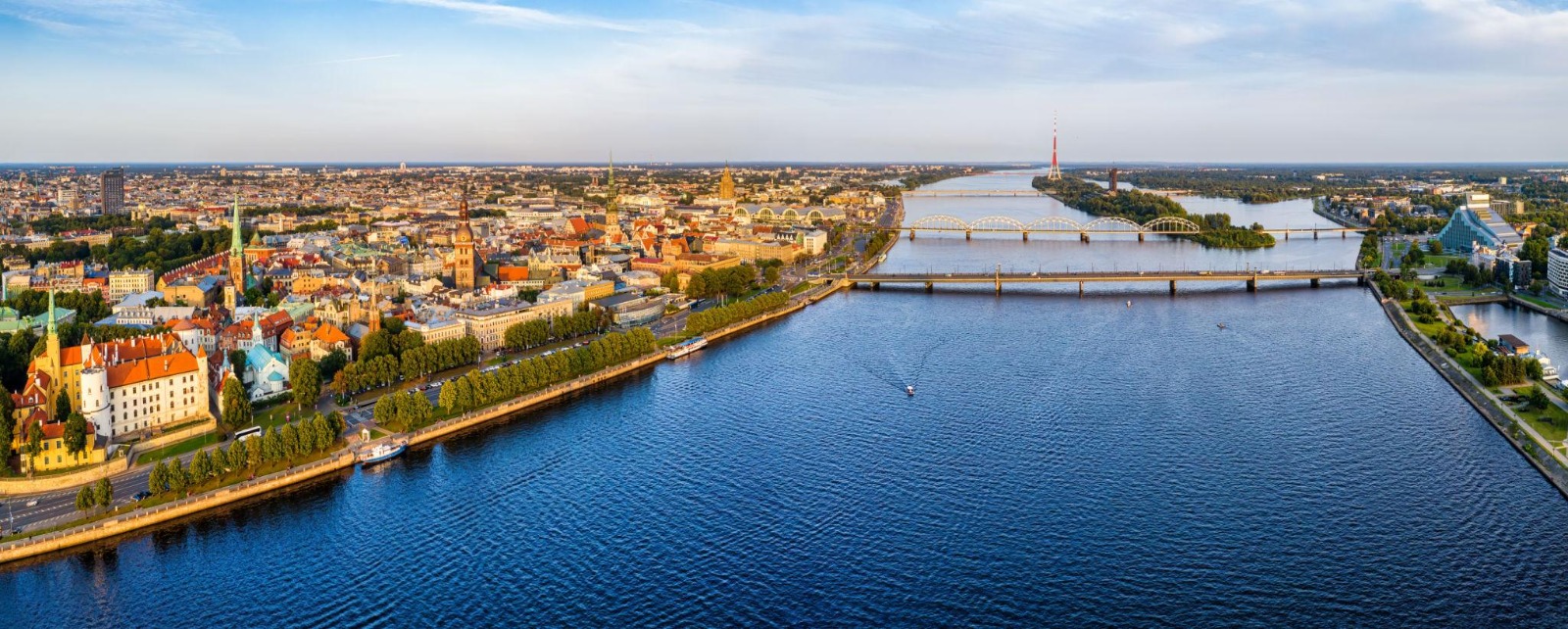
Study in Latvia in 2027: Tuition Fees, Living Costs, Admission and Student Visa Requirements
Thinking about studying in Europe but want to explore destinations beyond the usual choices? Latvia could be worth considering.
Located in Northern Europe and part of the European Union and Schengen Area, Latvia offers international students access to higher education institutions, English-taught programmes and a relatively accessible European study environment.
For Nigerian students planning to study abroad in 2027, Latvia deserves a closer look, particularly if you are interested in business, computer science, engineering, logistics or technology-related programmes.
However, choosing a study destination requires more than looking at tuition fees. You need to understand the cost of accommodation, the amount of money required for a student residence permit, admission conditions and the rules governing international students.
This guide explains how to study in Latvia in 2027, including realistic costs, university admission requirements, visa procedures and employment opportunities.
1. Why Consider Studying in Latvia in 2027?
Latvia is an EU member state with a higher education system that offers academic and professionally oriented qualifications.
Riga, the country’s capital, is home to several higher education institutions and an international student community.
Here are some reasons international students consider Latvia:
- European higher education: Students can pursue recognised qualifications within Latvia’s higher education system.
- English-taught programmes: International students can find programmes taught in English across different academic disciplines.
- Different tuition options: Tuition fees depend on the institution, qualification and chosen programme.
- Schengen location: Latvia’s location provides opportunities for short-term travel within the Schengen Area, subject to applicable travel rules.
- Technology and business programmes: Students can explore courses in computer science, engineering, logistics, management and other fields.
- Student employment opportunities: Eligible international students can work while studying, subject to applicable restrictions.
Latvia is not automatically the right destination for every applicant. Your academic qualifications, financial capacity, chosen programme and long-term career objectives should determine whether it is a suitable option.
2. How Much Does It Cost to Study in Latvia?
One of the most important considerations when planning to study in Latvia is the total financial commitment.
Tuition fees are not the only expense. Students must also budget for accommodation, food, transportation, insurance, immigration processing and other personal expenses.
University tuition fees
Tuition fees in Latvia vary significantly depending on the institution and programme. According to the official Study in Latvia platform, indicative annual tuition ranges include:
| Study area | Approximate annual tuition |
|---|---|
| Business Administration and Management | €2,000–€6,000 |
| Engineering | €2,700–€3,500 |
| Computer Science | €1,800–€3,800 |
| Healthcare and Medicine | €8,000–€15,000 |
These are general indicative figures, not guaranteed prices for every university.
For a more specific example, the Transport and Telecommunication Institute (TSI) publishes a 2026/2027 tuition schedule for its programmes.
Its published full-time fee schedule includes:
- Business and Management: €2,900 and €3,900 annual fee entries.
- Transport and Logistics: €2,900 and €3,900 annual fee entries.
- Computer Science: €3,300 and €3,900 annual fee entries.
- Master’s in Business and Management: €2,700 and €4,500 annual fee entries.
- Double Degree in Computer Science: Data Analytics and Artificial Intelligence: €5,600 and €6,500 annual fee entries.
The schedule presents different fee amounts. Nigerian applicants should obtain written confirmation from TSI of the applicable international tuition rate before making a payment.
The published 2026/2027 schedule should also not be mistaken for a confirmed 2027/2028 fee schedule.
Cost of living in Latvia
Living expenses depend on your accommodation, city, lifestyle and spending habits.
The official Study in Latvia international student survival guide gives a typical monthly living-cost estimate of approximately €700–€800, including accommodation.
A practical budget should account for:
| Expense | Estimated monthly cost |
|---|---|
| Overall living expenses | €700–€800 |
| Food | Included in overall estimate |
| Accommodation | Depends on housing arrangement |
| Transportation | Depends on student eligibility and usage |
| Utilities and internet | Depends on accommodation |
The figures should not be added together because the €700–€800 estimate already covers ordinary living expenses.
Accommodation options include student hostels, shared apartments and private rentals. Students should confirm availability, location, deposits and whether utilities are included before signing an agreement.
What is the estimated first-year budget?
Using a tuition example of €3,900 per year and the official €700–€800 monthly living-cost estimate:
| Expense | Estimated annual amount |
|---|---|
| Tuition | €3,900 |
| Living expenses (12 months) | €8,400–€9,600 |
| Estimated first-year total | €12,300–€13,500 |
This is an illustrative budget, not a universal Latvia study package.
It excludes application and registration charges, residence permit processing, insurance, flights, document authentication and other personal expenses.
It also does not include any additional study deposit required by a particular institution.
For example, TSI specifies a study deposit equal to one academic year’s tuition for applicants from Nigeria. The institution states that this deposit is subsequently used as payment or part-payment during the student’s final year. It is therefore an additional upfront cash-flow requirement, not an extra annual living expense.

3. Admission Requirements for International Students
Admission requirements depend on the institution, programme and qualification level. However, prospective students should generally prepare the following documents:
Undergraduate admission
Applicants seeking bachelor’s degree programmes will generally need:
- A completed secondary school qualification.
- Academic transcripts or examination results.
- A valid international passport.
- Proof of English-language proficiency where required.
- Any additional documents requested by the institution.
Postgraduate admission
Applicants seeking master’s degree programmes will generally need:
- A recognised bachelor’s degree.
- Academic transcripts.
- A valid international passport.
- Proof of English-language proficiency.
- A CV or other supporting documents where required.
- Additional programme-specific admission documents.
Applicants should also check whether their previous academic qualifications require recognition or verification through Latvia’s Academic Information Centre (AIC).
English-language requirements
Many Latvian institutions offer programmes taught in English.
However, studying in English does not mean that every university waives English-language requirements.
For example, TSI publishes the following English-language requirements for international applicants:
| Qualification level | IELTS minimum |
|---|---|
| Bachelor’s | 5.5 |
| Master’s and PhD | 6.0 |
TSI also lists other accepted English-language qualifications, including TOEFL, Cambridge English, Pearson and Duolingo, with programme-specific score requirements.
Some applicants may be able to provide evidence of previous education in English, subject to the institution’s assessment.
Always confirm the accepted tests and exemption conditions before submitting your application.
4. Latvia Student Visa and Residence Permit Requirements for Nigerians
Nigerian applicants must pay particular attention to Latvia’s immigration procedures.
A student admission letter alone does not give you permission to travel to Latvia for long-term studies.
According to the Latvian Embassy’s published study-residence-permit instructions, Nigerian students are among the nationalities required to obtain a residence permit before entering Latvia for studies.
The process involves the university and the Office of Citizenship and Migration Affairs (OCMA).
How the student residence permit process works
The general procedure includes:
Step 1: Secure admission
Apply to an eligible Latvian higher education institution and obtain an admission decision.
Step 2: Complete the university’s enrolment requirements
Sign the study agreement and fulfil the institution’s payment and document requirements.
Step 3: Obtain the university invitation
The university submits the relevant invitation request to OCMA. You will need the approved invitation information for the immigration application.
Step 4: Prepare your residence permit application
Prepare the required immigration documents, including financial evidence, passport details, academic documents and other supporting records.
Step 5: Attend the designated consular appointment
Nigerian applicants must follow the current Latvian diplomatic mission instructions for their application. The Embassy of Latvia’s published instructions identify the residence permit application process for Nigerian students and require an appointment and an interview.
Step 6: Wait for the decision
The embassy’s published guidance indicates that processing may take up to eight weeks. This is an indicative period, not a guaranteed processing time.
Step 7: Complete the entry visa and arrival procedures
Follow the instructions issued by the Latvian authorities after the residence permit decision. Complete any required entry visa and residence permit formalities before travelling.
Do not purchase non-refundable flight tickets based solely on university admission.
Documents to prepare
The exact checklist will depend on your circumstances and the current consular instructions. Applicants should prepare for requests for:
- Valid international passport.
- Completed residence permit application.
- Recent passport photograph.
- Official university admission and study agreement.
- Approved university invitation number.
- Proof of sufficient financial means.
- Academic certificates and transcripts.
- Police clearance certificate, where required.
- Proof of accommodation, where requested.
- Health insurance and other supporting documents.
- Evidence of payment of applicable state fees.
Foreign public documents may require legalization or authentication and certified translation, depending on the document and the Latvian authorities’ instructions.
Do not assume that ordinary photocopies will be accepted where original, authenticated or translated documents are required.

5. How Much Money Must You Show for a Latvia Student Residence Permit?
Financial evidence is one of the most important parts of the application.
Latvia’s Office of Citizenship and Migration Affairs updated its necessary-subsistence guidance in March 2026.
From 1 April 2026, the minimum monthly wage used for the relevant general subsistence category is €780 per month.
A current Latvian university’s 2026 student immigration guidance also identifies €780 per month as the student subsistence requirement.
Using 12 months as an illustrative planning period:
€780 × 12 = €9,360.
Therefore, a student should plan around €9,360 for 12 months of subsistence evidence, subject to confirmation of the exact amount, duration and documentary requirements applicable to the individual application.
Important: This financial evidence is not the same as tuition fees, and it should not be confused with the student’s complete study budget.
You must separately plan for tuition, accommodation and other costs.
The authorities may also require additional evidence depending on your circumstances and the documents submitted.
6. Can International Students Work While Studying in Latvia?
Yes. Eligible international students can work in Latvia, but the permitted working hours depend on the level and conditions of their studies.
According to Latvia’s Integration and Inclusion Agency:
- Full-time bachelor’s students can work up to 20 hours per week during the academic period.
- Bachelor’s students may work up to 40 hours per week during study holidays.
- Full-time master’s and doctoral students have the right to work without the same hourly restrictions, subject to applicable conditions.
Students must remain compliant with their study and residence permit conditions.
It is important to understand that part-time employment should not be treated as the primary source of funding for your education.
You should demonstrate that you can finance your studies and living expenses without depending on finding a job immediately after arrival.
7. What Happens After Graduation?
Students considering Latvia should also understand the options available after completing their studies.
According to the official Study in Latvia guidance:
- Bachelor’s graduates receive an additional four months of residence after completing their studies.
- Master’s and doctoral graduates also receive four additional months.
- Master’s and doctoral graduates may apply for a further nine-month extension to look for employment.
The additional nine-month extension is subject to an individual application and approval by OCMA. It is not automatic or guaranteed.
Students who secure suitable employment may explore the applicable residence permit arrangements for working in Latvia.
It is important to distinguish between a post-study opportunity to look for employment and an automatic right to permanent residence.
Graduation does not guarantee employment, a work-based residence permit or permanent settlement.
8. Scholarships and Financial Assistance
International students interested in Latvia should investigate both university-specific scholarships and opportunities offered through Latvian government programmes.
Potential sources include:
- University scholarships and tuition discounts.
- Institutional financial assistance.
- Latvian state scholarships for eligible international applicants.
- Other approved academic and research funding opportunities.
Scholarship availability depends on nationality, academic level, institution, programme and the relevant application cycle.
Do not assume that every international applicant is eligible for a government scholarship or that a scholarship covers all tuition and living expenses.
Check the current scholarship call, eligible countries, application deadlines and funding conditions before applying.
9. Universities to Explore in Latvia
Students interested in studying in Latvia should compare institutions based on their academic interests, tuition fees, accreditation, language of instruction and admission requirements.
One institution worth researching is:
Transport and Telecommunication Institute (TSI)
Located in Riga, TSI offers programmes in areas including:
- Computer Science.
- Business and Management.
- Transport and Logistics.
- Aviation Engineering.
- Robotics.
- Computer Engineering and Electronics.
- Data Analytics and Artificial Intelligence.
The institution publishes its international admission requirements, tuition schedules and application procedures on its official website.
Applicants should confirm the current programme availability, admission deadline, applicable international tuition fee and accreditation status before paying any fees.
10. Is Latvia a Good Study Destination for Nigerian Students?
Latvia may be worth considering if you are looking for an English-taught European programme, particularly in business, technology, engineering or logistics.
However, it is important to evaluate the destination realistically.
Latvia may be suitable for students who:
- Have the academic qualifications required for their chosen programme.
- Can demonstrate sufficient financial resources.
- Are interested in studying in a European country outside the more commonly marketed destinations.
- Are comfortable adapting to a different language and culture.
- Have realistic expectations about employment and post-study opportunities.
On the other hand, students who intend to finance their entire education through part-time work should reconsider their plans.
You should also research accommodation availability, local employment opportunities and the cost of living before making a final decision.

Frequently Asked Questions About Studying in Latvia
1. How much does it cost to study in Latvia?
Tuition varies by university and programme. The official Study in Latvia platform gives indicative annual fees of €2,000–€6,000 for business administration, €2,700–€3,500 for engineering and €1,800–€3,800 for computer science. Students should budget separately for living expenses.
2. Can Nigerians study in Latvia?
Yes. Nigerian applicants can apply to eligible Latvian higher education institutions. They must satisfy the institution’s admission conditions and follow the applicable residence permit and visa procedures.
3. Is IELTS compulsory for studying in Latvia?
Not universally. English-language requirements depend on the institution and programme. Some universities accept alternative English-language qualifications or consider previous education in English.
4. How much bank balance is required for a Latvia student residence permit?
The current 2026 monthly subsistence figure is €780 for the relevant general category. A 12-month planning calculation is €9,360. Applicants must confirm the exact financial evidence requirements with their university and the Latvian authorities.
5. Can I work while studying in Latvia?
Yes. Eligible full-time bachelor’s students can work up to 20 hours weekly during academic periods and up to 40 hours during study holidays. Full-time master’s and doctoral students have different employment-hour provisions.
6. Can I stay in Latvia after graduation?
Eligible graduates receive an additional four months of residence after their studies. Master’s and doctoral graduates may apply for a further nine-month job-search extension, subject to OCMA approval.
7. Can I bring my family while studying in Latvia?
Family reunification may be possible under applicable immigration conditions, but it is not an automatic entitlement for every student. Applicants should confirm the current eligibility, financial and documentary requirements with OCMA before making family travel plans.
8. When should I apply for the 2027 intake?
Start researching programmes and preparing your documents well ahead of the intended intake. Some institutions have early application deadlines, particularly for applicants who require residence permits. Always check the university’s published deadline for your nationality and programme.
Final Thoughts
Latvia deserves consideration as an alternative European study destination, but choosing it should be based on more than attractive tuition figures.
Before applying, compare the full cost of your chosen programme, verify the institution’s accreditation, prepare your financial evidence and understand the residence permit process.
The best study destination is not necessarily the cheapest one. It is the one where your academic background, financial capacity and career objectives align.
Planning to study in Latvia in 2027?
At Hitouch Global, we help prospective international students explore study destinations, identify suitable institutions and understand the admission and application process.
Before you pay an application fee or tuition deposit, let us help you assess whether your academic profile and budget are suitable for your intended programme.
Send Hitouch Global a message with the word LATVIA to begin your study destination assessment.